



Voltar ao topo
November is the month when there is a lot of talk about men's health. The Blue November campaign highlights the importance of preventive screenings, especially for prostate health. But taking care of your health goes beyond visiting the doctor once a year: what you put on your plate every day also makes a big difference.
And when it comes to men's nutrition, one nutrient deserves special attention: protein. Many people still associate protein only with those who train hard at the gym, but it plays a vital role in essential bodily functions, such as muscle maintenance, immune defense, and recovery after physical exertion.
Why is protein so important for men?
Protein acts as the body's "building blocks." It is made up of small units called amino acids, which the body uses to build and repair tissues around the clock.
In practice, protein helps to:
- maintain and build muscle mass;
- recover muscles after exercise and daily physical effort;
- strengthen the immune system;
- produce enzymes and hormones;
- increase satiety, which helps with weight management.
For men, muscle mass plays a role that goes beyond aesthetics. Strong muscles help protect joints, improve energy levels, contribute to blood sugar control, and are great allies for aging with more independence.
How much protein does a man need per day?
The minimum recommendation for healthy adults is about 0.8 g of protein per kilogram of body weight per day. This amount serves to prevent deficiency, but it is not necessarily the ideal amount for everyone.
For active men who exercise regularly or are over 40, needs are usually higher, between 1.2 and 1.6 g per kilogram per day. In specific situations, such as intense training or weight loss programs, a nutritionist may recommend slightly higher amounts.
To give you an idea: an 80 kg man who exercises may need somewhere between 96 and 128 g of protein per day.
These numbers are just a reference. The right amount depends on age, weight, activity level, goals, and health conditions, and should be determined with a professional.
Where can you find protein in your diet?
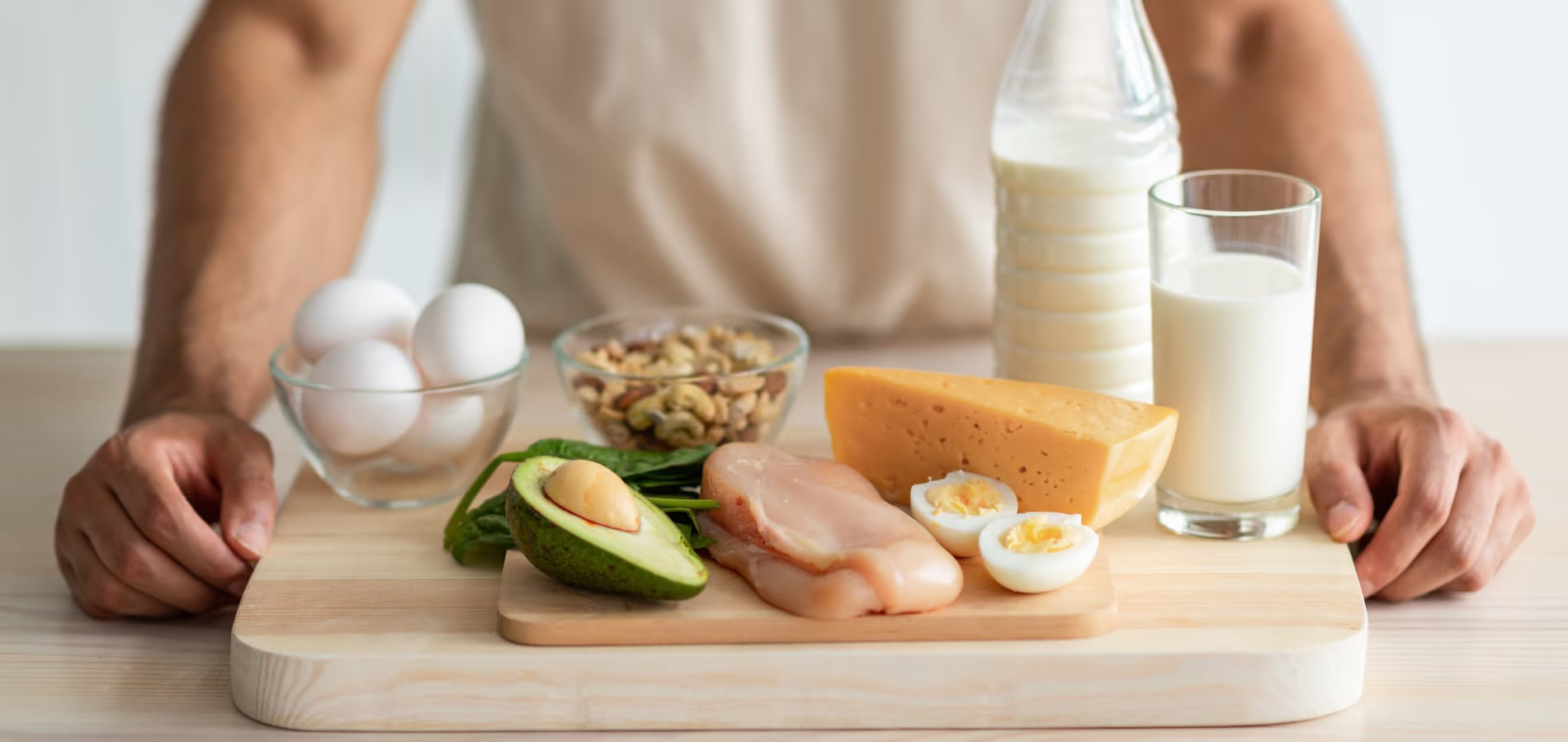
The good news is that you can meet your protein needs with everyday foods. Meat is among the most concentrated sources: 100 g of grilled chicken breast provides about 30 g of protein, the same portion of lean red meat has around 26 g, and fish like tilapia and salmon provide 20 to 25 g.
Other options also help round out your day. One egg has about 6 g of protein, a cup of plain yogurt (170 g) provides 6 to 10 g, and a slice of white cheese (30 g) adds approximately 5 g. A ladle of cooked beans, lentils, or chickpeas offers 5 to 7 g.
Animal-based proteins are considered high quality because they contain all the amino acids the body needs. Legumes, such as beans and lentils, are also excellent sources, especially when combined with grains. The traditional rice and beans combination is a great example of this partnership.
It’s not just about what you eat: timing matters too
A common mistake is packing almost all of your daily protein into lunch and dinner, leaving breakfast and snacks with little to no protein.
The body makes better use of this nutrient when it is spread throughout the day. A simple strategy is to include a source of protein in every meal, aiming for around 20 to 30g in each of your main meals.
Some practical ideas:
- Breakfast: scrambled eggs with whole-grain toast, or yogurt with fruit and oats.
- Lunch: rice, beans, a serving of meat, chicken, or fish, and a salad.
- Snack: white cheese, yogurt, or a protein shake.
- Dinner: vegetable omelet, or fish with potatoes and vegetables.
As the years go by, protein becomes even more important
Starting at age 30, the body begins to lose muscle mass naturally and gradually. This process intensifies after 50 and, without proper care, can lead to sarcopenia, which is a significant loss of muscle mass and strength.
In daily life, this can show up as getting tired more easily, difficulty climbing stairs or carrying heavy items, a higher risk of falls, and a slower metabolism.
The good news is that this process can be slowed down. Combining two habits is the most effective approach:
- strength training, such as weightlifting, Pilates, or functional training, which stimulates muscles to stay strong;
- adequate protein intake, which provides the "raw material" for muscle maintenance and growth.
One habit helps on its own, but the two together make a much bigger difference.
Supplementation: an ally for a busy routine
It isn't always easy to hit your protein goals through food alone, especially for those who spend the day away from home, travel frequently, or have little time to prepare meals. In these cases, supplements can be a practical way to complement your diet.
Among the most well-known options are:
- Whey protein: a fast-absorbing milk-derived protein rich in amino acids essential for muscles. It can be used in shakes, smoothies, porridge, and even in recipes.
- Plant-based proteins: made from peas, rice, and other sources, these are an alternative for those who don't consume dairy or follow a vegetarian or vegan diet.
- Collagen: contributes to the health of joints, skin, and tissues, and can complement the strategy of those who train or are looking to age with better quality of life.
- Creatine: it is not a protein, but it often goes hand-in-hand with it. It is one of the most studied supplements for strength gains and maintaining muscle mass, including in men over 50.
Worth remembering: supplements complement your diet, they don't replace it. Ideally, the choice of product and dosage should be made under the guidance of a nutritionist or doctor, taking into account each person's routine, goals, and medical tests.
Common mistakes when consuming protein
Some habits hinder the absorption of this nutrient or can even pose risks. Keep an eye out for these:
- Thinking protein is only for those who work out: everyone needs it, at any age and in any routine.
- Overdoing processed meats: sausages, hot dogs, bacon, and deli meats contain protein, but also a lot of sodium and fat. Ideally, these should be the exception, not the foundation of your diet.
- Forgetting the rest of the plate: protein works best as part of a balanced diet that includes fruits, vegetables, legumes, whole grains, and healthy fats.
- Skipping meals: long periods without eating make it difficult to distribute protein intake throughout the day.
- Excessive consumption without guidance: more protein does not mean more muscle. Men with kidney disease or other health conditions need professional guidance before increasing their intake.
- Forgetting to drink water: anyone increasing their protein intake should also make sure to stay well-hydrated.
Conclusion
Blue November is a great reminder that men's health deserves attention all year round, not just during check-ups. This care also involves nutrition and the choices made in daily life.
Protein is important for maintaining strong muscles, recovering the body, supporting immunity, and aging with more energy and independence. Distributing good sources of this nutrient throughout the day, practicing strength training, and using supplements when necessary are steps that make a difference in the long run.
Keeping up with routine exams and working with a nutritionist helps create a dietary strategy tailored to each person's routine and goals. Caring for men's health is an ongoing process that can start with simple choices, such as ensuring a good source of protein in every meal. After all, taking care of your health also means eating well.