



Voltar ao topo
Breast cancer is the most common type of cancer among women in Brazil and worldwide, excluding non-melanoma skin tumors. According to the National Cancer Institute (INCA), approximately 73,000 new cases are estimated each year in the country. Although it is much more frequent in women, it can also affect men, who account for about 1% of cases.
Behind these numbers, there is good news: when breast cancer is identified in its early stages, the chances of a cure and less aggressive treatments are much higher. Furthermore, some cases are related to factors that can be modified through lifestyle habits, such as diet, physical activity, and alcohol consumption.
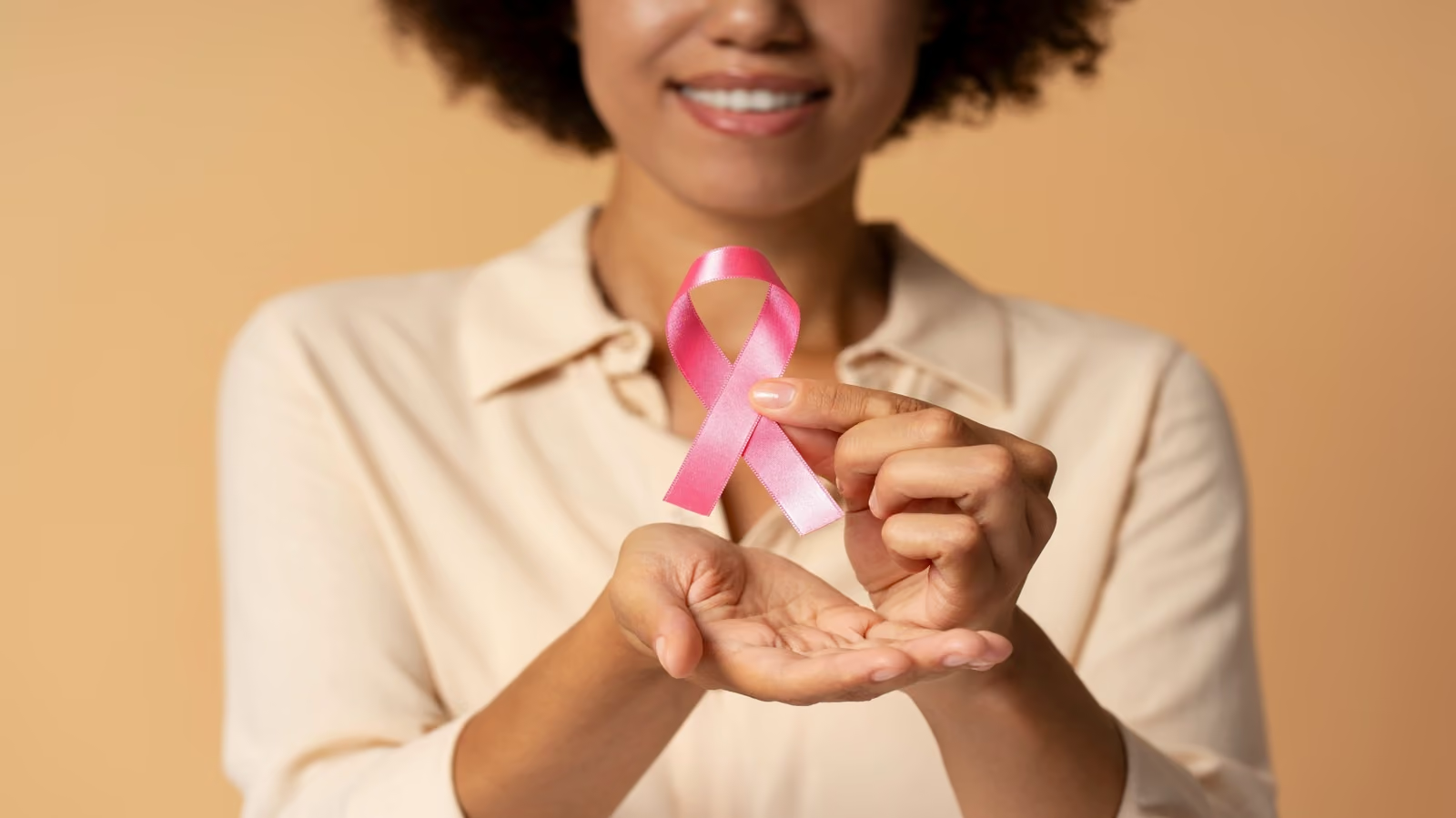
That is why Pink October, an international movement to raise awareness about the disease, reinforces a simple and powerful message: information is also a form of care. Knowing the risk factors, adopting healthy habits, and keeping up with screenings are actions that make a difference.
Understanding how to prevent it, what signs to look for, and the role of nutrition in this process is essential for taking care of breast health at every stage of life.
Why is information so important?
Breast cancer does not have a single cause. It results from a combination of genetic, hormonal, environmental, and lifestyle factors. Some of these factors cannot be changed, but knowing them helps define the appropriate follow-up. Others can be modified, and that is precisely where prevention gains strength.
Among the factors that cannot be modified are age, as the risk increases significantly after 50, and a family history of breast or ovarian cancer. Genetic mutations, such as those in the BRCA1 and BRCA2 genes, also increase the risk. The same applies to having one's first period before age 12, menopause after age 55, dense breast tissue, and previous radiation exposure to the chest.
On the other hand, modifiable factors include being overweight or obese, especially after menopause, a sedentary lifestyle, and alcohol consumption. Prolonged hormone replacement therapy without medical supervision also increases the risk, as does not breastfeeding, having one's first pregnancy after age 30, or not having children.
Having one or more risk factors does not mean a person will develop the disease, just as having none of them does not guarantee total protection. The main point is that it is estimated that about 30% of cases could be avoided with healthy lifestyle habits.
Daily prevention: care begins with your choices
Balanced diet
A diet based on whole, unprocessed foods and minimally processed foods is associated with a lower risk of various types of cancer, including breast cancer. It is worth prioritizing:
· a variety of fruits, vegetables, and greens in different colors;
· whole grains, such as brown rice, oats, and quinoa;
· legumes, such as beans, lentils, chickpeas, and soy;
· sources of healthy fats, such as olive oil, nuts, seeds, and fish.
Fiber helps regulate hormones and maintain a healthy gut, while fruits and vegetables provide antioxidant and anti-inflammatory compounds. On the other hand, it is advisable to reduce the consumption of ultra-processed foods, processed meats (such as deli meats), sugars, and excess fats.
Healthy body weight
After menopause, adipose tissue becomes one of the body's primary sources of estrogen. For this reason, excess body fat, especially in the abdominal area, is associated with a higher risk of breast cancer during this stage of life.
Alcohol: the less, the better
Consuming alcoholic beverages increases the risk of breast cancer, even in small amounts. There is no safe level of consumption, and the risk increases as intake rises.
Physical activity
Regular exercise helps control weight, regulates hormone levels, boosts immunity, and reduces inflammation. The recommendation is 150 to 300 minutes of moderate activity per week, such as brisk walking, dancing, or cycling, or 75 to 150 minutes of vigorous activity, combined with strength training.
Breastfeeding
Breastfeeding is also a protective factor. The longer the total duration of breastfeeding over a lifetime, the greater the benefit for the mother, in addition to all the advantages for the baby.
Early detection: the diagnosis that makes a difference
Not all breast cancer cases can be prevented. Therefore, in addition to healthy habits, it is essential to identify the disease as early as possible, when treatment tends to be simpler and more effective.
Breast self-awareness
Observing and touching your own breasts in daily life, such as while showering or getting dressed, helps you become familiar with your body's normal appearance and notice any changes. Self-awareness does not replace medical exams, but it is an important ally in seeking medical evaluation at the right time.
Clinical examination
Performed by a doctor or healthcare professional during routine check-ups, a clinical breast exam evaluates for lumps, skin changes, and lymph nodes in the underarm area.
Mammography
Mammography is the primary screening exam, capable of identifying changes before they are even palpable. Recommendations regarding the starting age and frequency vary among institutions: the Ministry of Health prioritizes mammograms every two years for women aged 50 to 74 and has expanded access for those aged 40 to 49, while medical societies, such as the Brazilian Society of Mastology, recommend annual exams starting at age 40.
Women with a significant family history or genetic mutations may need to begin screening earlier and with additional tests, such as ultrasound and magnetic resonance imaging. The best strategy should be defined in consultation with a doctor on an individualized basis.
Warning signs in the breasts
Some changes deserve attention and should be evaluated by a doctor:
· a hardened lump in the breast or underarm, usually painless;
· breast skin that is red, retracted, or has an orange-peel texture;
· nipple changes, such as retraction, sores, or scaling;
· spontaneous nipple discharge, especially if it is clear or bloody;
· small lumps in the armpits or neck;
· changes in the size or shape of one of the breasts.
Most of the time, these changes are not cancer. Even so, only a medical evaluation and the appropriate tests can confirm the diagnosis. If you notice any changes, the safest course of action is to seek medical attention without waiting for your next routine check-up.
Nutrition during and after treatment
When a diagnosis is confirmed, nutrition remains an important ally. Surgery, chemotherapy, radiation therapy, and hormone therapy can cause side effects such as nausea, loss of appetite, taste changes, fatigue, weight gain or loss, and muscle mass loss. Personalized nutritional support is based on three pillars:
Maintaining nutritional status: ensuring sufficient energy and nutrients helps the body better tolerate treatment and reduces the risk of interruptions.
Preserving muscle mass: adequate protein intake, distributed throughout the day and combined with guided physical activity, helps maintain strength and quality of life.
Symptom management: adjustments to the consistency, volume, and timing of meals help manage nausea, mouth sores, and bowel changes.
After treatment, maintaining a healthy weight, a diet rich in vegetables and fiber, and regular exercise contributes to recovery and is associated with a lower risk of recurrence.
Supplements: what the science says
To date, no supplement has been shown to prevent breast cancer. Protection comes from a combination of healthy habits, not from any single nutrient. Even so, when based on an individual assessment, supplementation can play an important role in specific situations:
Vitamin D: deficiency is common in the general population and can be corrected with supplementation when identified through testing. It is also important for bone health, especially in women undergoing certain hormone therapies after treatment.
Calcium: may be recommended when dietary intake does not meet requirements, especially post-menopause and during treatments that affect bone health.
Proteins: protein supplements can help meet daily goals when appetite is reduced, contributing to the preservation of muscle mass.
Omega-3: can contribute to inflammation control and weight maintenance during certain phases of treatment, always under professional guidance.
Some precautions are important. High doses of antioxidants can interfere with the effectiveness of chemotherapy and radiotherapy, and supplements based on phytoestrogens or herbal medicines can interact with medications and hormone therapy. Therefore, during treatment, no supplement should be started without consulting your medical team.
It is important to highlight that supplementation does not replace a well-structured diet, and its use should be guided by a nutritionist or doctor.
Conclusion
Breast cancer prevention goes far beyond Pink October. Maintaining a balanced diet, engaging in physical activity, managing weight, avoiding alcohol, and keeping up with screenings are actions that, together, reduce risks and increase the chances of early diagnosis.
With quality information, professional guidance, and attention to your body's signals, every woman becomes the protagonist of her own health. After all, when it comes to breast cancer, information is also a form of care, and taking care of yourself is the first step.